
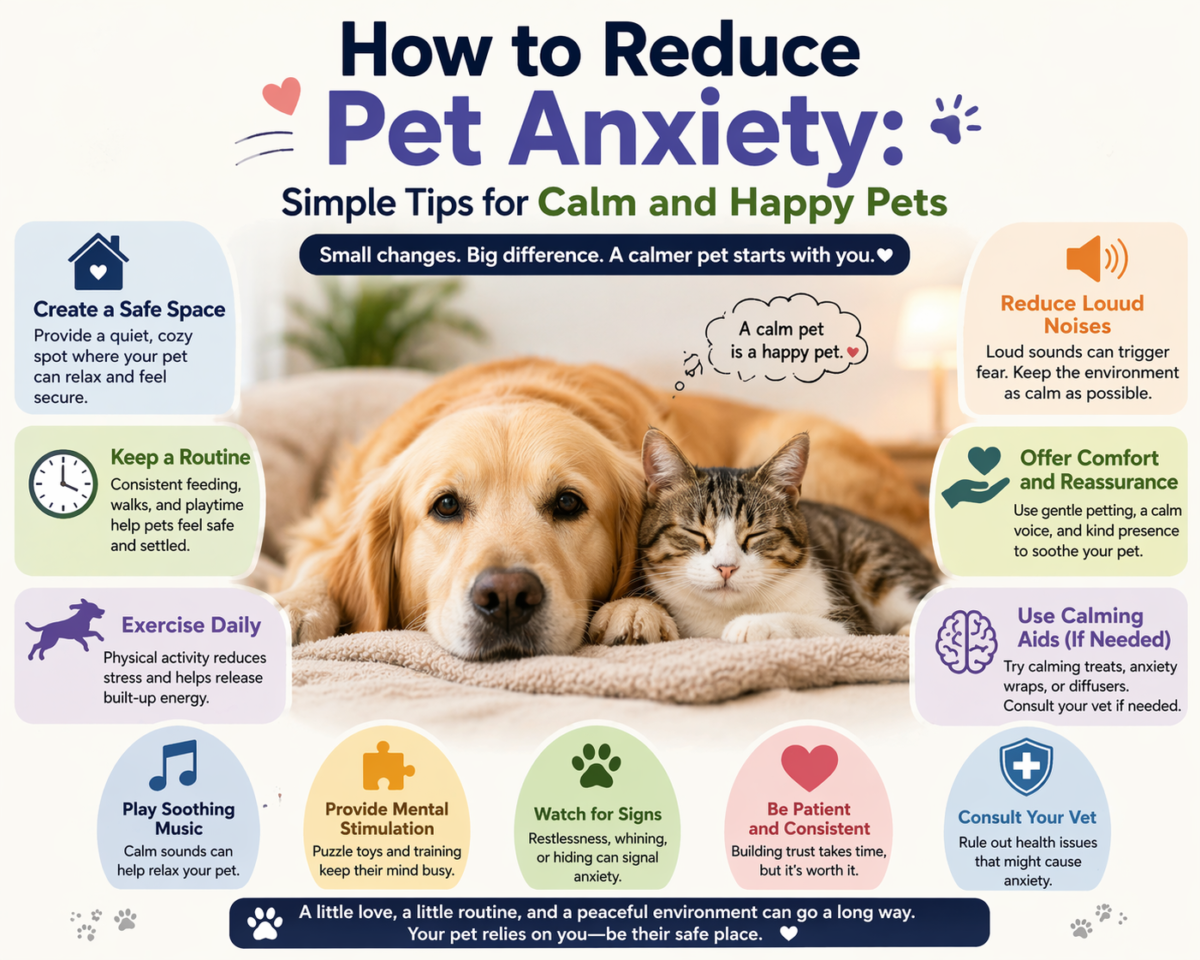
Pets, just like humans, can experience anxiety and stress. Loud noises, separation, new environments, or even changes in routine can make them feel uncomfortable.
Understanding and managing your pet’s anxiety is key to keeping them happy, calm, and emotionally balanced.
😟 1. Identify the Cause of Anxiety
Before solving the problem, you need to understand what’s causing it.
Common triggers:
- Separation from owner
- Loud sounds (fireworks, thunder)
- New people or pets
- Travel or moving homes
👉 Observing your pet’s behavior helps you find the root cause.
🏡 2. Create a Safe Space
Every pet needs a place where they feel secure.
- Provide a cozy bed or crate
- Keep their favorite toys nearby
- Choose a quiet corner of the house
👉 A safe space helps reduce stress during anxious moments.
🧘 3. Maintain a Consistent Routine
Pets feel more relaxed when they know what to expect.
- Feed at the same time daily
- Regular walks and playtime
- Consistent sleep schedule
👉 Routine builds trust and stability.
🎾 4. Use Mental & Physical Stimulation
Keeping your pet engaged helps reduce anxiety.
- Puzzle toys
- Interactive games
- Training sessions
👉 A busy mind is less likely to feel stressed.
❤️ 5. Give Comfort and Reassurance
Your presence matters more than anything.
- Speak in a calm voice
- Gentle petting
- Stay close during stressful situations
👉 Your pet feels safe when you are calm.
🌿 6. Natural Calming Solutions
You can also try natural ways to relax your pet.
- Calming sprays or diffusers
- Soft music or white noise
- Herbal calming treats (vet-approved)
🏥 7. When to See a Vet
If anxiety becomes severe, professional help is important.
- Excessive barking or meowing
- Destructive behavior
- Loss of appetite
👉 A vet can suggest proper treatment or therapy.
🐾 Conclusion
Pet anxiety is common, but with patience, love, and the right approach, it can be managed effectively.
A calm pet is a happy pet — and a happy pet makes a happy home ❤️